
How Patients Use the Internet for Cardiovascular Prevention
pp. 314-320
DOI:
https://doi.org/10.7775/rac.v83i4.4132Keywords:
Internet, Social Networking, Cardiovascular Diseases, Prevention and ControlAbstract
Background:
The use of the Internet and social networks by patients seeking health-related information has grown in recent years. The application of these tools in the context of cardiovascular prevention in Argentina is unknown.
Objectives:
The aim of this study was to analyze the use of the Internet and social networks in patients evaluated in the context of cardiovascular prevention, determine the characteristics of subjects using them, analyze the reliability and usefulness perceived by patients and describe the potential behavioral impact.
Methods:
Patients over 18 years of age, consecutively attending 10 cardiology centers focusing on cardiovascular prevention of the City of Buenos Aires and suburban areas, were surveyed. In 97% of cases the surveys were completed by the patients. Participant's demographic and clinical data were collected, excluding subjects with inability to read and interpret a questionnaire.
Results:
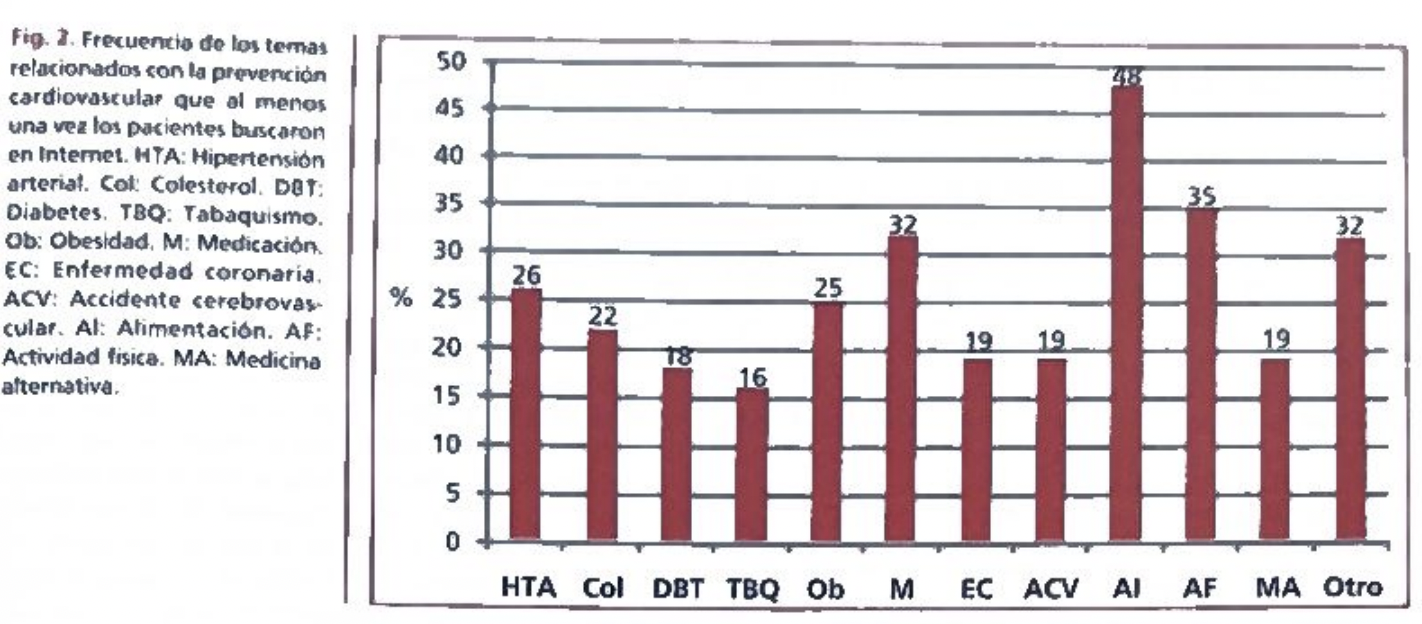
A total of 1,135 patients (age 49 ± 17 years) were included in the study. Among them 68%, 65% and 52% used Internet, email or social networks, respectively and 58.2% sought health-related information. The most searched-for topics were food (48%), physical activity (35%), medication (32%), hypertension (26%) and obesity (25%). Information was considered reliable or very reliable in 54.6% of cases, and interest was perceived in using these tools to contact the physician or other patients. In 57.8% of cases, patients felt that the network could influence their behavior. Characteristics such as less than 50 years of age, attending private healthcare centers or higher education were independently associated with a greater possibility of seeking health information.
Downloads
Published
Issue
Section
License
Copyright (c) 2026 Argentine Journal of Cardiology

This work is licensed under a Creative Commons Attribution-NonCommercial-ShareAlike 4.0 International License.





