Temporal Evolution of the Psychophysical Impact of COVID-19 Pandemic on Health Workers
pp. 484-488
DOI:
https://doi.org/10.7775/rac.es.v89.i6.20452Abstract
Background: The Coronavirus-2 pandemic has generated clear negative psychological effects on health workers. Our objective was to describe the temporal evolution of these effects.
Methods: The results of the ImPaCTS-SAC.20 survey which evaluated anxiety, depression, burnout, lifestyle alterations and personal relationships, in the Autonomous City of Buenos Aires and Buenos Aires Province were compared in the periods of June-July and August-September, 2020. The responses of 862 health workers from the Metropolitan Area of Buenos Aires (AMBA) were analyzed.
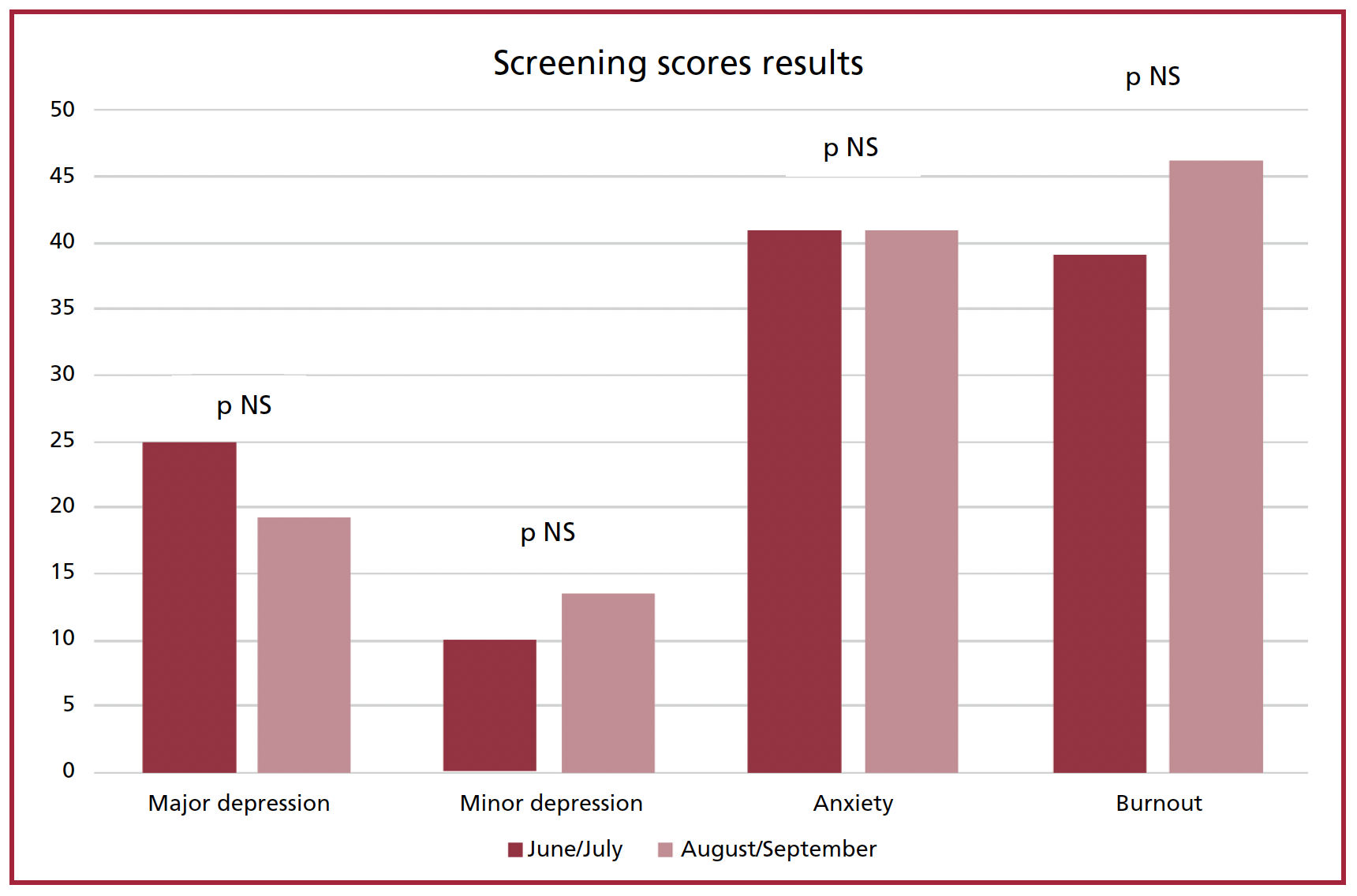
Results: There were proportionally more cases of mild and moderate depression in august/september than in june/july, however, this difference was not statistically significant (p=0.151). The rate of respondents who presented anxiety remained stable: 41% vs. 41% (p=0.941). As the pandemic progressed, the rate of non-smokers decreased (85.1% vs. 77.4%, p=0.036) and a significant increase was observed in professionals who resorted to psychotherapy (15% vs. 24.6%, p=0.001), with no significant differences in other methods to manage stress.
Conclusions: The psychophysical consequences caused by the pandemic did not differ between the months of june and september, so they could be long-lasting and require professional psychological assistance.
How to cite this article:
Bellia S, Battioni L, Scatularo CE, Godoy Armando C, Giorgini JC, Lescano A, Pereiro SM. Temporal Evolution of the Psychophysical Impact of COVID-19 Pandemic on Health Workers. Rev Argent Cardiol 2021;89:484-488 http://dx.doi.org/10.7775/rac.v89.i6.20452
Downloads
Published
Issue
Section
License
Copyright (c) 2021 Argentine Journal of Cardiology

This work is licensed under a Creative Commons Attribution-NonCommercial-ShareAlike 4.0 International License.