Present Use of Aspirin as an Antithrombotic Agent: Current or Outdated Drug?
pp. 280-289
DOI:
https://doi.org/10.7775/rac.es.v90.i4.20533Keywords:
Aspirin - Prevention - EvidenceAbstract
Acetylsalicylic acid, or aspirin, is one of pharmacological tools most widely used in the care of cardiovascular patients. For years, it has been widely used in primary and secondary prevention to reduce cardiovascular risk.
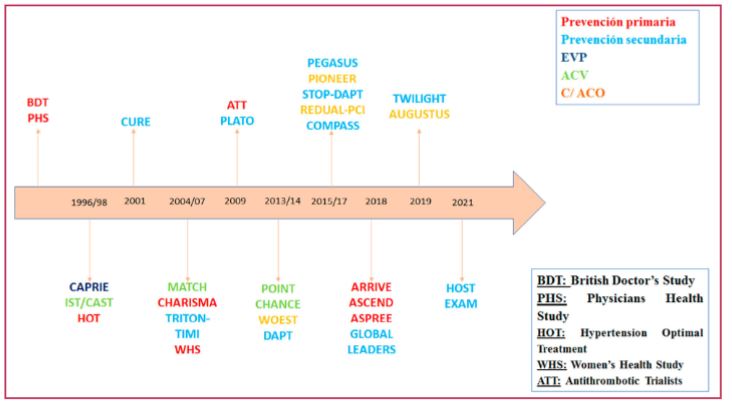
Aspirin utilization has been questioned in recent times, with new trials in different scenarios of cardiovascular disease, such as peripheral vascular disease, stroke, primary prevention in the context of modern medical treatment, or in patients with acute coronary syndrome and concomitant need for anticoagulation. In turn, new studies question the need to maintain aspirin for 12 months together with a thienopyridine after an acute coronary syndrome, suggesting shorter regimens.
In this review, we evaluate the evidence behind the current indications for aspirin use in different clinical scenarios and provide recommendations on a case-by-case basis.
How to cite this article:
Sigal AR, Belcastro F, Furmento J, Dossi D, Cerezo G, Trivi M, et al. Present Use of Aspirin as an Antithrombotic Agent: Current or Outdated Drug? Rev Argent Cardiol 2022;90:280-9. http://dx.doi.org/10.7775/rac.v90.i4.20533