Changes in the Degree of Mitral Regurgitation in Patients with Multiple Valve Disease and Transcatheter Aortic Valve Implantation
pp. 220-226
DOI:
https://doi.org/10.7775/rac.es.v85.i3.11021Keywords:
Aortic Valve - Aortic Stenosis - Mitral Valve Insufficiency - Transcatheter Aortic Valve ReplacementAbstract
Background: Patients undergoing double valve replacement due to severe aortic stenosis and significant mitral regurgitation present high surgical morbidity and mortality. It has been suggested that transcatheter aortic valve implantation produces an inverse left ventricular remodeling resulting in favorable changes in the loading conditions and subsequent mitral regurgitation improvement.
Objective: The aim of this study was to assess the benefit of isolated transcatheter aortic valve implantation in these patients and to analyze the influence of decreased afterload and favorable left ventricular remodeling on mitral regurgitation.
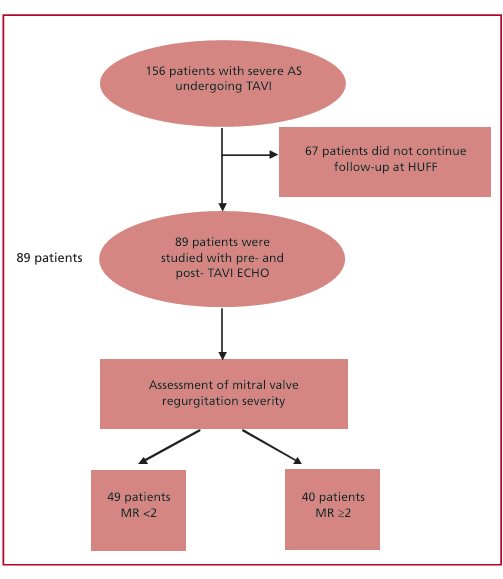
Methods: The study retrospectively analyzed 89 consecutive patients undergoing transcatheter aortic valve implantation at a single center between March 2009 and August 2015, due to symptomatic severe aortic stenosis and high surgical risk. Echocardiograms were analyzed before the procedure and at one-month of follow-up. Forty patients identified with significant mitral regurgitation constituted the final sample and object of this investigation.
Results: Baseline mitral regurgitation was classified as severe (+4) in 5 patients (12.5%), moderate to severe (+3) in 18 patients (45%) and mild to moderate (+2) in 17 patients (42.5%). During follow-up, mitral regurgitation was identified as +4 in 1 patient (2.5%), +3 in 12 patients (30%), +2 in 8 patients (20%), +1 in 15 patients (37.5%) and 4 patients (10%) exhibited no mitral regurgitation; all changes were statistically significant (p=0.045).
Conclusion: Our results suggest that in patients with multiple valve disease, rejected for surgical treatment due to high risk, transcatheter aortic valve implantation could be the main therapeutic option, as there is a high probability of mitral regurgitation reduction after the procedure.
Downloads
Published
Issue
Section
License
Copyright (c) 2017 Argentine Journal of Cardiology

This work is licensed under a Creative Commons Attribution-NonCommercial-ShareAlike 4.0 International License.