
Impact of the New Guidelines to Prescribe Statins in a University Hospital
pp. 247-250
DOI:
https://doi.org/10.7775/rac.es.v85.i3.9794Keywords:
Cholesterol - Statins - Risk Scores - GuidelinesAbstract
Background: The application of the new guidelines for the use of statins has increased the number of new statin prescriptions; however, there are no investigations on this topic in our region.
Objective: The aim of this study was to compare in a population consisting of members belonging to a healthcare system, the proportion of persons that would be eligible for statin therapy under the new 2013 ACC-AHA guidelines versus the previous ATP III guidelines.
Methods: The ratio of subjects that would be eligible for statin therapy under both guidelines was analyzed in a simple random sample without replacement, and the results were extrapolated to the entire population of the healthcare system.
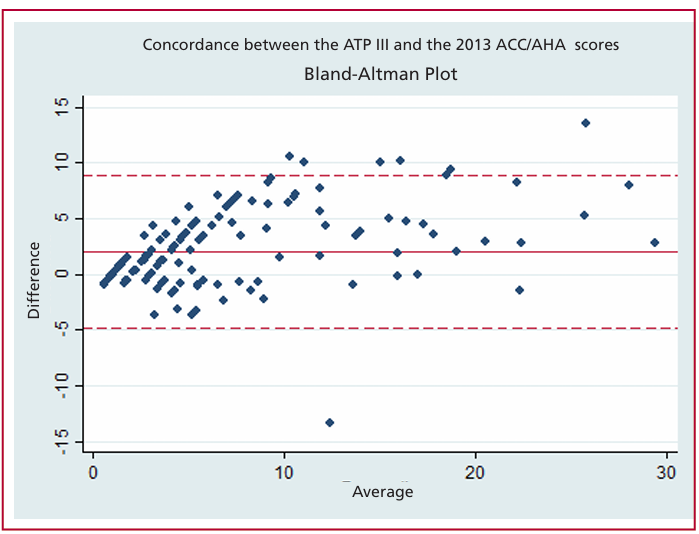
Results: A total of 226 patients were analyzed. Applying the ATP-III and the 2013 ACC/AHA guidelines, 35.8% and 52.2% of the population was eligible for statin therapy, respectively. The difference was higher in women (18.3%) and in subjects >60 years (27.1%). Applying the new guidelines to the entire hospital population (n=75,139) would imply an increase of 12,323 statin prescriptions.
Conclusion: The application of the new guidelines was associated with greater potential prescription of statins, particularly among women and older subjects.
Downloads
Published
Issue
Section
License
Copyright (c) 2017 Argentine Journal of Cardiology

This work is licensed under a Creative Commons Attribution-NonCommercial-ShareAlike 4.0 International License.





