
Association between Diastolic Wall Stress in Severe Aortic Stenosis with Preserved Ejection Fraction and Heart Failure
pp. 163-170
DOI:
https://doi.org/10.7775/rac.es.v86.i3.12312Keywords:
Heart Failure, Diastolic/physiopathology - Aortic Valve Stenosis Vascular Stiffness - Elasticity/physiologyAbstract
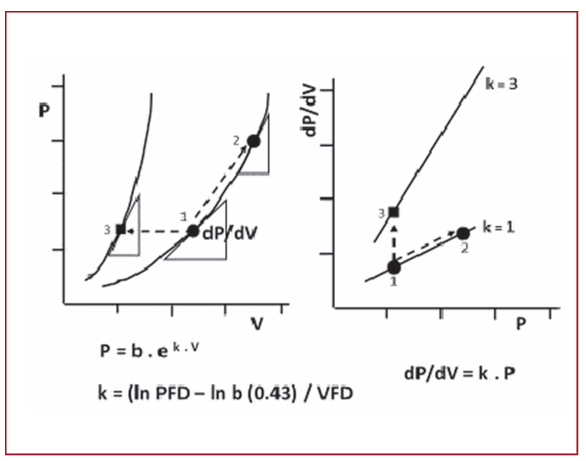
Background: The pathophysiology of diastolic left ventricular dysfunction includes abnormalities in ventricular relaxation, passive elastic stiffness or a combination of both mechanisms. Doppler echocardiography can evaluate ventricular relaxation but not passive elastic stiffness. Diastolic wall stress evaluates passive elastic stiffness through the reduction of end-diastolic myocardial compression.
Objective: The aim of this study was to evaluate passive elastic stiffness by means of diastolic wall stress in patients with severe aortic stenosis with preserved ejection fraction and its association with class III-IV heart failure.
Methods: A total of 76 patients (mean age 67 ± 11 years) with severe aortic stenosis (aortic valve area < 0.6 cm2/m2) and ejection fraction of 50% or greater were evaluated. Diastolic wall stress was calculated as: (systolic posterior wall thickness - diastolic posterior wall thickness) / systolic posterior wall thickness measured in mode M echocardiography. E/e’ ratio, end diastolic left ventricular pressure and end-diastolic pressure-volume relationship were calculated by non-invasive methods. The patients were divided in two groups: group: heart failure class III-IV (n = 5 patients) and group 2: without heart failure (n = 71 patients).
Results: Passive elastic stiffness was greater in patients in group 1, demonstrated by reduced diastolic wall stress (0.23 ± 0.05 vs. 0.30 ± 0.06 p < 0.01), and higher E/e’ ratio (20 ± 7 vs. 14 ± 8 p < 0.05), end-diastolic left ventricular pressure and end-diastolic pressure-volume relationship.
Conclusion: Diastolic wall stress could detect abnormalities in passive elastic stiffness in patients with severe aortic stenosis with preserved ejection fraction and heart failure that cannot be evaluated using the traditional parameters of diastolic function.
Downloads
Published
Issue
Section
License
Copyright (c) 2018 Argentine Journal of Cardiology

This work is licensed under a Creative Commons Attribution-NonCommercial-ShareAlike 4.0 International License.





