Clinical and Functional Outcome of Percutaneous Alcohol Septal Ablation in Obstructive Hypertrophic Cardiomyopathy
pp. 217-222
DOI:
https://doi.org/10.7775/rac.es.v83.i3.5919Keywords:
Key words: Cardiomyopathy, Hypertrophic - Ablation TechniquesAbstract
Background: Percutaneous septal ablation is a therapeutic option for patients with obstructive hypertrophic cardiomyopathy refractory to optimal medical therapy. However, results of initial persistence and long-term safety are still controversial.
Objectives: The aim of this study was to report percutaneous alcohol septal ablation technique, clinical and functional outcome, cardiovascular events and its impact on long-term follow-up.
Methods: A total of 23 patients were included in the study. Functional class (FC), left ventricular outflow tract gradient before and after the procedure and long-term cardiovascular events were evaluated.
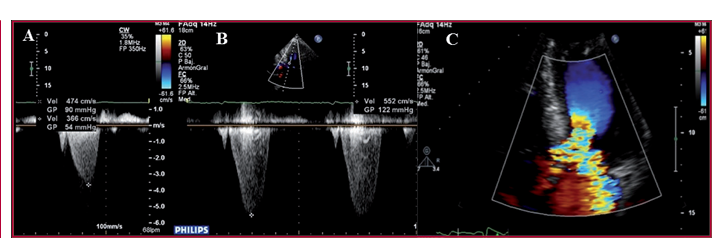
Results: Median follow-up was 52 months (IR 33-72). All patients were in FC III or IV prior to the procedure, under maximum tolerated medical therapy. The procedure was successful in 91% of cases, with 85% of patients currently in FC I and 15% in FC II. Baseline left ventricular outflow tract gradient decreased from 75 mmHg (95% CI 51-89) to 25 mmHg (95% CI 10-37) (p<0.003) and with Valsalva maneuver from 118 mmHg (95% CI 88-152) to 38 mmHg (IC 95% 16-69) (p<0.0002), persisting in the long-term follow-up. During hospitalization, two patients presented with complete atrioventricular block requiring permanent pacemaker implantation. No cardiovascular deaths occurred during follow up.
Conclusions: Alcohol septal ablation is a promising option for the treatment of a selected population with hypertrophic obstructive cardiomyopathy, generating sustained clinical and functional improvement with low incidence of events in the long-term follow up.
Downloads
Published
Issue
Section
License
Copyright (c) 2015 Argentine Journal of Cardiology

This work is licensed under a Creative Commons Attribution-NonCommercial-ShareAlike 4.0 International License.