
The Left Ventricle end Diastolic Pressure and the Time of Propagation of Left Auricle Pressure Wave are Inversely Correlated
pp 79-85
DOI:
https://doi.org/10.7775/rac.v68i1.3097Keywords:
A-Ar interval, Left ventricular en diastolic pressure, Echo-Doppler, Coronary artery diseaseAbstract
Objective
To assess the value of the A-Ar interval measurement obtained with echo-Doppler to predict the left ventricular end-diastolic pressure (LVEDP) measured by cardiac catheterization.
Material and methods
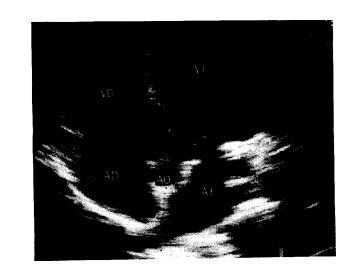
We studied 44 patients (37 men) mean age 58.66 years (range 40-78) with coronary artery disease -proven by coronary angiography-with the follow-ing lesions: 20 patients, 1 vessel; 11 patients, 2 vessels; 5 patients, 3 vessels; and 8 patients without significant lesions. The following parameters were assessed: IV diameters, E and A velocities, E/A ratio, E deceleration slope (EDS), A deceleration slope (ADS), isovolumic relaxation period (IRP), and the time of propagation of the A wave pressure from the IV inflow tract (LVIT) to the IV outflow tract(LVOT), called the A-Ar interval. This interval isthe Doppler expression of passive elasticity. The A-Ar interval was measured in m secs from the peak of the mitral A wave to the nadir of the mitral A reverse wave (Ar), that corresponds to the negative deflection of the A wave from mitral flow, in a point located 2cm below the aortic level in the apical 5-chamber-view. Cardiac catheterization was per-formed one hour after the echo-Doppler study and the LVEDP was measured before ventriculography. We analyzed the possible relationship betweenLVEDP and A-Ar interval, E and A waves, E/A ratio, EDS, ADS and IRP. Statistical analysis was per-formed by means of a simple linear relation.
Results
An LVEDP of 19 ± 6.8 mm Hg correlated with anA-Ar of 63±17 msec, with an r= -0.77(p = 0.0001). An A-Ar interval below 50 msec correspond to a LVEDP higher than 24 mm Hg. The following mean results obtained E: 0.68±0.14 msec, A: 0.91 ±0.9 m/sec, E/A: 1±0.4, EDS: 220 ± 59 msec, ADS: 96 ± 40 msec, and IRP: 112 ±31 msec, did not correlate with LVEDP.
Conclusions
The A-Ar interval duration made it possible to predict he LVEDP by means of a non invasive approach, with a high correlation and statistical significance: the smaller the A-Ar interval value the greater the LVEDP.
Downloads
Published
Issue
Section
License
Copyright (c) 2026 Argentine Journal of Cardiology

This work is licensed under a Creative Commons Attribution-NonCommercial-ShareAlike 4.0 International License.





