
Prognostic Markers in Unstable Angina: Role of the Quantitative T-Troponine Determination
pp 171-178
DOI:
https://doi.org/10.7775/rac.v66i2.3505Keywords:
Unstable angina, T Troponin, PrognosticAbstract
May clinical, electrocardiographic and laboratory indicators either alone or in combination have been used to predict the risk for patients with unstable angina.
Objectives
Identify independent prognostic markers in unstable angina in association with two end points: 1) death or myocardial infarction; 2) death, infarction or refractory angina.
Material and method
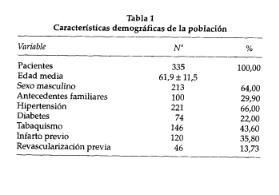
Were prospectively included 335 patients. CK, CK-MB and T troponin determinations were done within 6-24 hours period. After 30 day follow up 73 patients (21.9%) sustained refractory angina, while38 (11.4%) sustained infarction or death. Eighteen clinical variables, electrocardiographic abnormalities and laboratory test were analyzed using univariate and multivariate.
Results
T troponin levels >_ 0.1 ng/ml were considered positives and were detected in 113 cases (23.7%). Were associated with end point of death or infarction in univariate analysis: chest pain at rest (odds ratio 8,8.p = 0.02), high risk according to American classification (odds ratio 2.0; p = 0.04), CK increased < 100% (odds ratio 4,4; p = 0.003), recurrent angina (odds ratio 4.5; p = 0.00002) and T troponin positive (odds ratio 3.6; p = 0.0003); only recurrent angina (odds ratio 4.2;p = 0.0002) and T troponin increased (odds ratio 2.3; p= 0.039) were independent markers. In crescendo angina (odds ratio 1.9; p = 0.01), angina at rest (odds ratio 4.5; p = 0.001), less 24 hours since the last chest pain (odds ratio 2.7; p = 0.03), electrocardiographic changes (odds ratio 1.8; p = 0.03), CK increased CK levels (odds ratio 2.4; p = 0.03), recurrent chest pain (odds ratio 7.3; p = 0.00001), high risk (odds ratio 3.6; p = < 0.00001) and positive T troponin (odds ratio 2.9; p = 0.00005). According to multivariate analysis angina at rest (odds ratio 2.8. p = 0.04), increased T troponin levels (odds ratio 2.5; p = 0.002), recurrent angina (odds ratio 6.9; p = 0.00001) and high risk (odds ratio 3.3; p =0.0001) were all independent variables.
Conclusions
For patients with unstable angina the presence of recurrent angina and T troponin > 0.1 ng/ml were both independently associated to the evolving to infarction or death; in addition to both predictors angina at rest and the earliest high risk characteristic were independent markers of an evolving course to refractory angina, infarction or death.
Downloads
Published
Issue
Section
License
Copyright (c) 2026 Argentine Journal of Cardiology

This work is licensed under a Creative Commons Attribution-NonCommercial-ShareAlike 4.0 International License.





