
The Cardiovascular System in Hypertension, From Genetics to Clinical Practice
pp 556-563
DOI:
https://doi.org/10.7775/rac.v69i5.3855Keywords:
Hypertension, Left ventricular hypertrophy, Regression, Vascular changesAbstract
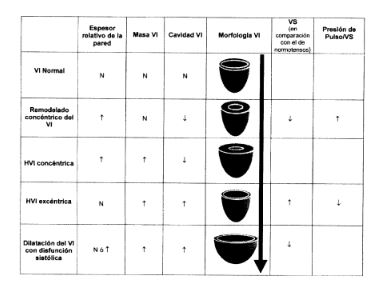
Changes in IV geometry not only stratify target organ damage risks but are also related to hemodynamic parameter disturbances. While increased total peripheral resistance is the main promoter of left ventricular hypertrophy, the sympathetic and rennin-angiotensin-aldosterone system (RAAS) hyperactivity and some others have important roles in the development of ventricular hypertrophy and vascular changes. It is of great interest the demonstration of alternative mechanisms of angiotensinII generation besides the angiotensin-converting enzyme (ACE) in myocardium and vascular wall, suggesting that cardiac angiotensin II could be produced at the tissue level by conversion of in situ synthesized rather than blood-derived angiotensin I.The increased wall stress imposed by the elevated blood pressure and neuroendocrine influences induce mytogenic proto-oncogene expression that drives to hypertrophy and collagen interstitial deposition. There is endothelial dysfunction associated with reduce nitric oxide synthesis and in-creased production of a variety of mediators and growth factors. Reactive oxygen species influence both normal and abnormal cellular processes, including growth, hypertrophy, remodeling, lipid oxidation, modulation of vascular tone, and inflammation. Left ventricular hypertrophy regression obtained by means of sodium restriction, weight reduction and pharmacological therapy may at least partly restore coronary flow and might reduce cardiovascular morbidity.
Downloads
Published
Issue
Section
License
Copyright (c) 2026 Argentine Journal of Cardiology

This work is licensed under a Creative Commons Attribution-NonCommercial-ShareAlike 4.0 International License.





