ST-Elevation Myocardial Infarction in Argentina. 11 Years of the Argen-IAM-ST Registry
pp. 384-400
DOI:
https://doi.org/10.7775/rac.es.v94.i5.21057Keywords:
Myocardial infarction, Registries, Epidemiology, Reperfusion, Primary AngioplastyAbstract
Background: ST-segment elevation acute myocardial infarction (STEMI) is the leading cause of morbidity and mortality worldwide and in our country. Having a registry with sufficiently robust data can enable the adoption of public policies and guidelines tailored to national needs.
Objective: To identify clinical aspects, delays, treatment regimens, and outcomes, as well as potential barriers that need to be addressed in the care of STEMI.
Methods: Since December 2014, a national registry has been in place that includes patients with STEMI with a duration of less than 36 hours.
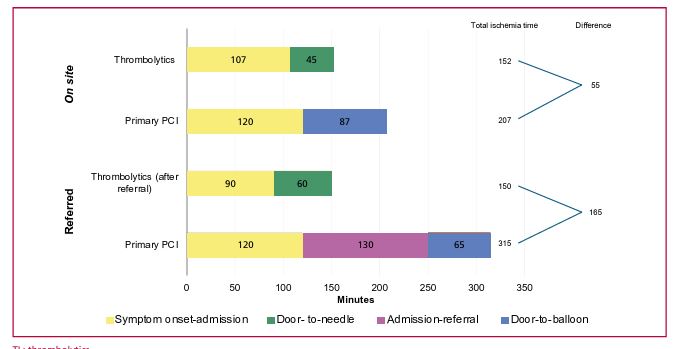
Results: As of December 2025, 8,073 patients had been included, with a mean age of 61 years; 79% were male. The infarct location was anterior in 50% of cases. Fifty percent of patients were admitted after being referred from another institution, but only 27% received fibrinolytics prior to referral. The overall reperfusion rate was 93% (10% with fibrinolytics and 80% with primary angioplasty), with treatment times that remain inadequate. Delays in treatment were reported in >60% of cases, particularly during the patient’s initial consultation and transport to the facility; among reperfused patients, the rate was 8%, and 15% among non-reperfused patients. Heart failure at admission was observed in 23% of patients and was one of the most significant predictors of mortality in the multivariate analysis.
Discussion: These data provide a snapshot of the current state of acute myocardial infarction (AMI) in Argentina and its evolution over the past 11 years. Despite high reperfusion rates, no significant changes in mortality have been observed. Delays in treatment are significant. There is a need to implement corrective strategies that could help reduce mortality.
Downloads
Published
Issue
Section
License
Copyright (c) 2026 Argentine Journal of Cardiology

This work is licensed under a Creative Commons Attribution-NonCommercial-ShareAlike 4.0 International License.