Labor Equity, Gender Violence and Cardiovascular Risk Factors in Cardiology Specialists
pp. 323-328
DOI:
https://doi.org/10.7775/rac.v90i5.7Keywords:
Cardiologists - Gender Equity - Heart Disease Risk Factors - Gender-Based Violence - Workplace Violence - ArgentinaAbstract
Cardiology specialists may suffer from stressors that affect their health, such as labor inequity and gender vio- lence, in addition to traditional cardiovascular risk factors (RF) for cardiovascular disease (CVD).
Objective: The aim of this study was to detect the level of well-being, labor equity and gender violence and to establish the prevalence of CRF in cardiology specialists in Argentina.
Methods: This was an observational, cross-sectional study through an anonymous survey conducted in September 2021 among specialists included in the Argentine Society of Cardiology registry. Data on labor equity, labor and domestic violence and CRF were collected.
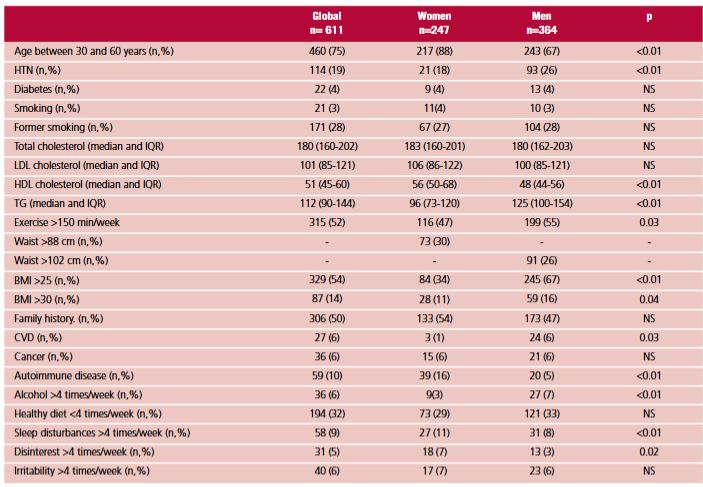
Results: Six hundred and eleven professionals (40.5% women) participated in the survey: 63% worked more than 44 hours per week; 3 out of 10 were on duty for 12 or 24 hours (38.5% women vs. 28% men, p<0.01). Seventy-two percent of respondents considered the workload excessive while 70% thought their payment was not in accordance with the academic training. Half of female cardiologists surveyed considered that motherhood limited professional development in the specialty. Work-related violence was more frequent in female cardiologists (58% vs. 10% p <0.01), as was domestic violence (16% vs. 6% p <0.01). Men were more overweight (67% men vs. 34% women, p <0.01) and obese (16% vs. 11%, p <0.01) and women were more sedentary (53% vs. 45%, p <0.01).
Conclusion: The disconformity in working conditions experienced by both genders was evident, as was the evidence of higher workplace and domestic gender violence in the female specialists surveyed. Despite having knowledge about CVD and car- diovascular RF, the surveyed specialists have a high prevalence of RF.
How to cite this article:
Crosa VL, Avalos Oddi A, Verdugo S, Castillo Costa Y, Cáceres L, Rubilar B. Labor Equity, Gender Violence and Cardiovascular Risk Factors in Cardiology Specialists. Rev Argent Cardiol 2022;90:323-8. http://dx.doi.org/10.7775/rac.v90.i5.20562