Implant of Cardiac Resynchronization Therapy Device in Patients with High Percentage of Right Ventricular Pacing and Refractory Heart Failure
pp. 440-443
DOI:
https://doi.org/10.7775/rac.es.v85.i5.10146Keywords:
Cardiac resynchronization therapy - Upgrade - Cardiac failure - Pacemaker - Implantable cardioverter defibrillatorAbstract
Introduction: Implant of a cardiac resynchronization therapy device in patients with pacemaker or implantable cardioverter defibrillator who develop heart failure with left ventricular dysfunction is controversial.
Objective: To evaluate the outcome of these patients after upgrading.
Methods: Patients undergoing upgrading between 2011 and 2015 were evaluated.
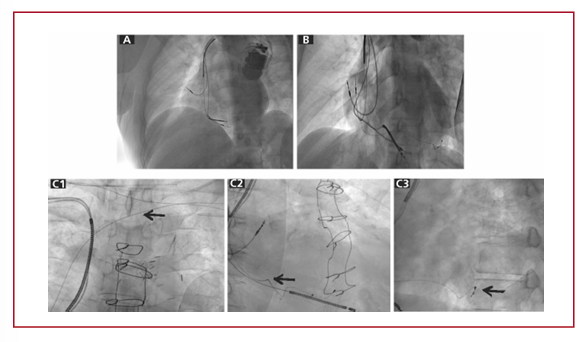
Results: A total of 21 patients were included; mean age was 70.7 ± 10-8 years. Mean QRS duration was 180.9 ± 23.2 ms and left ventricular ejection fraction was 26.8 ± 7.7%. The frequency of right ventricular pacing was 90.5 ± 19.3%. Ten patients were in functional class II and 11 in FC III. The implant was successful in 18 patients (85.7%). Left ventricular ejection fraction was 33.9 ± 10.4% one year after upgrading (p = 0.028). Thirteen patients improved their
functional class in at least one category and only 4 were rehospitalized due to heart failure (p = 0.048). The rate of complications was 14.28%.
Conclusions: Upgrading therapy improved symptoms and reduced hospitalizations due to heart failure.
Downloads
Published
Issue
Section
License
Copyright (c) 2017 Argentine Journal of Cardiology

This work is licensed under a Creative Commons Attribution-NonCommercial-ShareAlike 4.0 International License.