
A New Method for Estimating Left Ventricular End Di-astolic Pressure Using Chamber Stiffness Derived fromDeceleration Time
pp 171-177
DOI:
https://doi.org/10.7775/rac.v71i3.2917Keywords:
Diastolic function, Left ventricular chamber stiffness, Left ventricular end-diastolic pressure, Deceleration timeAbstract
Background
Average LV chamber stiffness (KLV) is calculated by dividing the change of pressure (DP) from the time of minimum LV pressure (P0) to end-diastolic pressure (EDP) by the change of the volume (DP) during this period: KLV = DP / DV. KLV can be determined non-invasively from deceleration time (DT) of transmitral flow (Little et al). We hypothesized thatEDP could be estimated using KLV derived from DT, taking into account that DV is similar to stroke volume (SV) and assuming EDP as the mean determinant of DP, (P0 was avoided). Therefore: KLV = EDP / SV and EDP = KLV . SV.
Methods
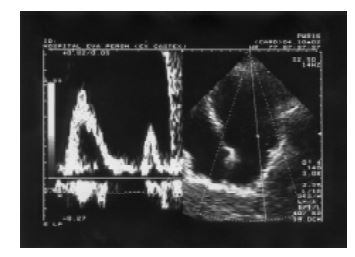
Twenty patients (58±10 years old) with coronary artery dis-ease were studied with Doppler of the mitral inflow one hour before catheterization. KLV was derived from DT according to Little equation: KLV = ([DT ñ 0,02] / 0,07) ñ2 mmHg/ml.SV was calculated as time velocity integral of LV outflow multiplied by area.
Results
EDP predicted and EDP measured during catheterization were linearly related: r = 0,81; p<0,001. By Bland-Altman analysis mean difference was 0,95±6,24 mm Hg.
Conclusion
EDP can be estimated non-invasively using chamber stiff-ness derived from DT.
Downloads
Published
Issue
Section
License
Copyright (c) 2026 Argentine Journal of Cardiology

This work is licensed under a Creative Commons Attribution-NonCommercial-ShareAlike 4.0 International License.





