Femoral Pseudoaneurysm Treatment by Local Thrombin Injection
pp. 227-231
DOI:
https://doi.org/10.7775/rac.es.v85.i3.9494Keywords:
Aneurysm, False - Thrombin - ThrombosisAbstract
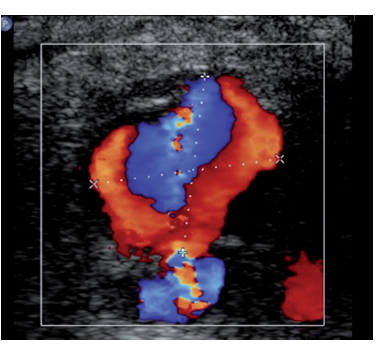
Background: Pseudoaneurysm is a rare complication (0.05-0.5%) after interventional procedures using femoral access. There are few registries of local thrombin injection for pseudoaneurysm closure as an alternative treatment to surgery after failed manual compression.
Objective: The aim of this study was to evaluate the safety and efficacy of iatrogenic femoral pseudoaneurysm closure with Doppler ultrasound-guided local thrombin injection.
Methods: Thirty-two patients were included for thrombin injection treatment between March 2007 and June 2016.
Results: Mean age was 64.3±10.2 years. Most pseudoaneurysms were associated with diagnostic or therapeutic cardiac catheterizations (59.3%). Seven patients had received anticoagulant treatment and 21, double antiplatelet therapy. In all cases, prior closure was attempted by manual compression. Mean pseudoaneurysm major diameter was 38 mm. Following treatment, immediate pseudoaneurysm sac thrombosis occurred in 28 patients (87.5%), while 4 patients required a second injection, resulting in 96.8% success rate. Treatment was not effective in only one patient, with subsequent conversion to programmed surgical repair. Mean thrombin dose was 450 units. Only one patient presented with venous thrombosis complication requiring anticoagulant therapy, with good clinical outcome.
Conclusion: Doppler ultrasound-guided local thrombin injection was a safe and effective therapeutic alternative for pseudoaneurysm treatment in patients with femoral pseudoaneurysm refractory to manual compression.
Downloads
Published
Issue
Section
License
Copyright (c) 2017 Argentine Journal of Cardiology

This work is licensed under a Creative Commons Attribution-NonCommercial-ShareAlike 4.0 International License.