Multicenter trial on the assessment of left ventricular volumes by radionuclide ventriculogram. In vitro validation and reproducibility in patients
pp 249-254
DOI:
https://doi.org/10.7775/rac.v60i3.3302Abstract
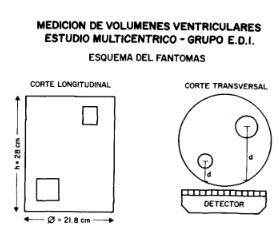
In recent years it has been suggested that left ventricular end-systolic volume might be the best prognostic measurement in ischemic heart disease. In addition, changes in left ventricular volume might play an important role in the complex mechanism of ventricular remodeling. The aim of the present study is the in vitro validation of a count-based method to determine left ventricular volume as well as its reproducibility in patients. The method is based on the count-volume lineality. The count rate inside the left ventricular, corrected for distance attenuation and radioisotope decay, is proportional to the activity in a known volume of blood. Seventeen centers measured a cilindric phantoma with two known volúmes of IC 99m. Solution from different distances of attenuation. Thereafter, one hundred patients underwent two consecutive measurements of left ventricular volume to assess its reproducibility. The correction for tissue attenuation was calculated measuring the distance from the left ventricle to chest surface following Links's technique.
(...)
Conclusions: 1) In vitro measurements overestimated real volumes when a 250 ml phanton was used and this error increased with distance. 2) The reproducibility in patients was rather good and this technique might be a useful tool in clinical trials using left ventricular volume as an end point.
Downloads
Published
Issue
Section
License
Copyright (c) 2026 Argentine Journal of Cardiology

This work is licensed under a Creative Commons Attribution-NonCommercial-ShareAlike 4.0 International License.